
In Switzerland, a CCT (Collective Labor Agreement) is an agreement concluded between the social partners (employers, employers’ associations, and trade unions) that sets minimum working conditions for a given industry or sector.
A CCT may define, in particular, minimum wages, working hours, vacation entitlements, specific social security contributions, and joint or professional contributions.
Depending on the sector of activity and the canton, the application of a CCT may be mandatory or declared generally binding by the authorities.
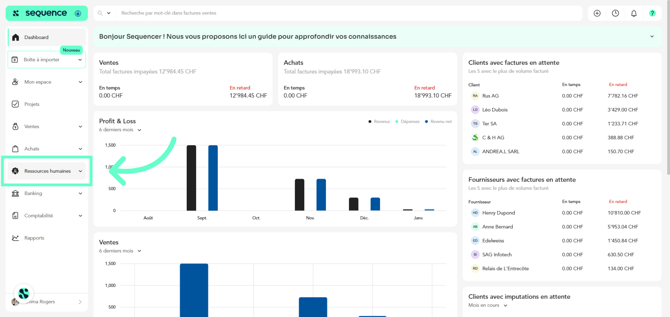
1. To complete the CCT salary policy, click on Human Resources in the left-hand side menu.
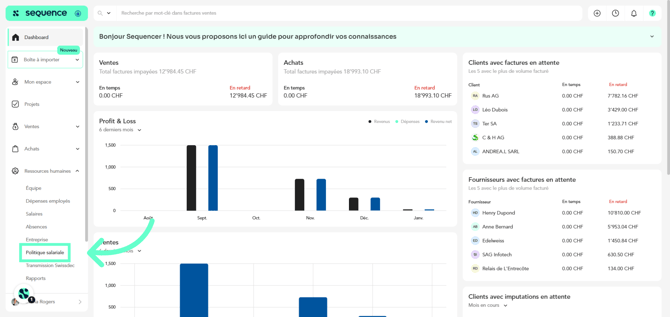
2. From the displayed options, select Salary Policy.
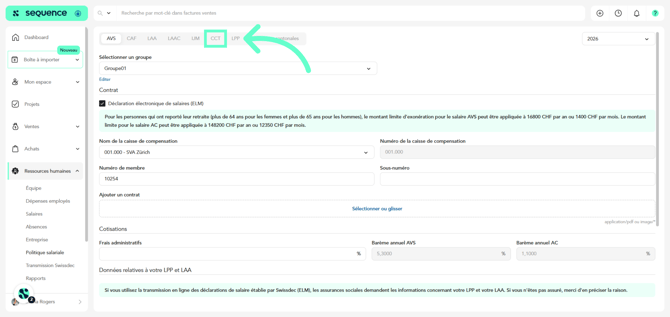
3. Go to the CCT tab.
4. Select the reference year.
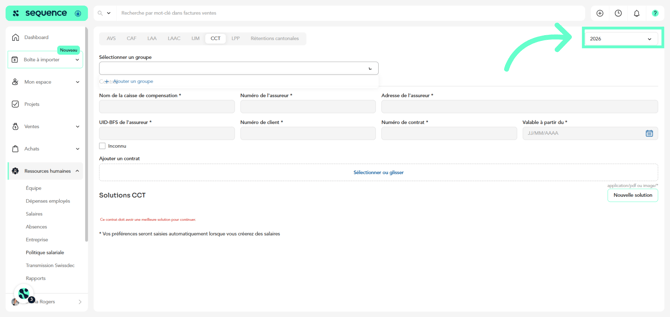
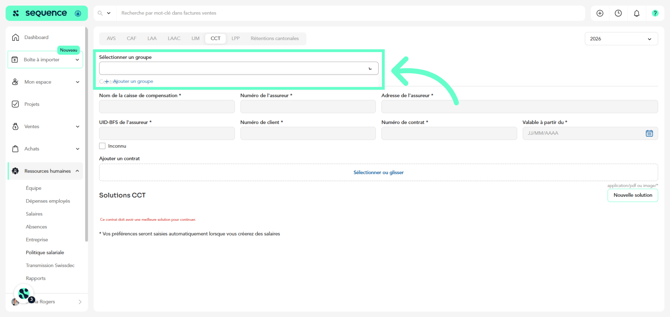
5. Create the group to which the CCT policy applies. This allows you to apply specific rules to a set of employees or entities, depending on your organization.
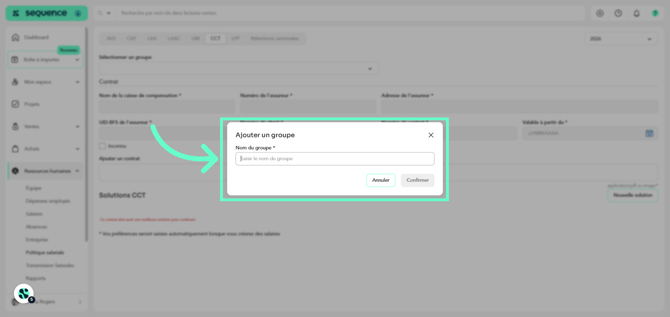
6. Enter the group name and click Confirm.
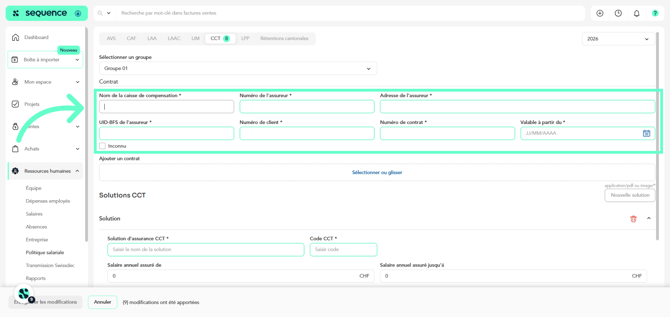
7. In the Contract section, enter the information related to the body responsible for the CCT: Name of the compensation fund or organization, Insurer number, Insurer address, Insurer UID-BFS, Customer number, Contract number, and Contract validity date.
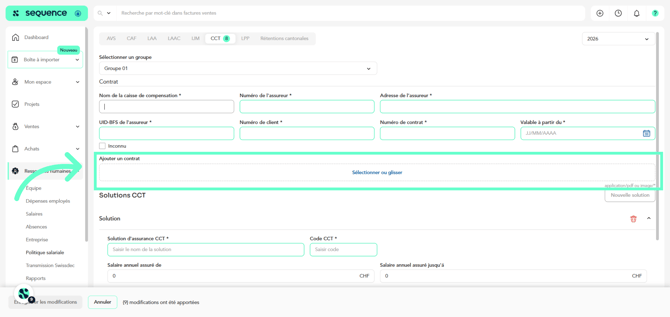
8. You can attach the contract with the compensation fund by uploading the corresponding document (PDF or image).
9. Define one or more CCT solutions. A company may be subject to several CCTs, depending on the sector of activity, the functions performed, and the staff categories.
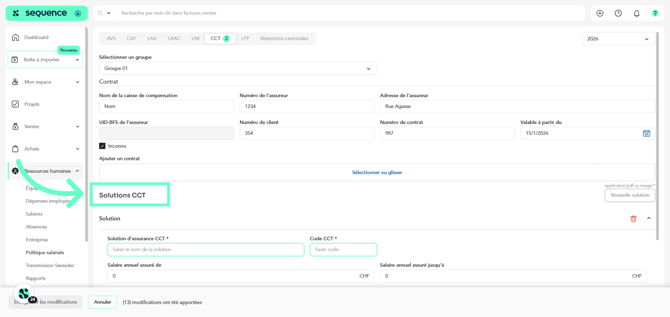
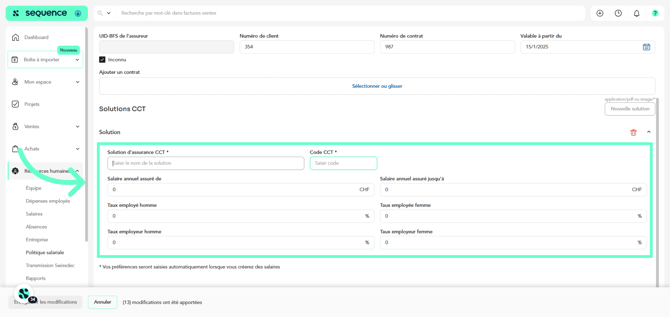
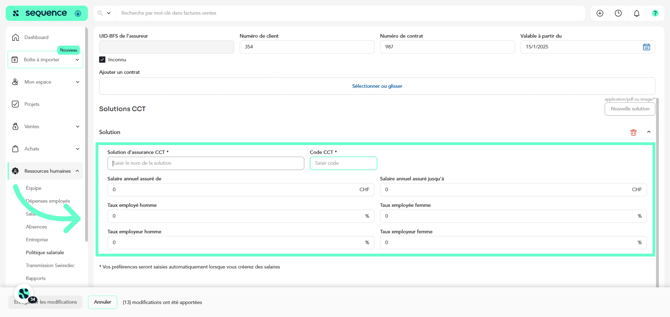
11. The contributions provided for by a CCT may be borne by the employer, borne by the employee, or shared between both. Sequence ERP allows this allocation to be configured precisely so that it is correctly applied on payslips.
12. Finally, click Save.
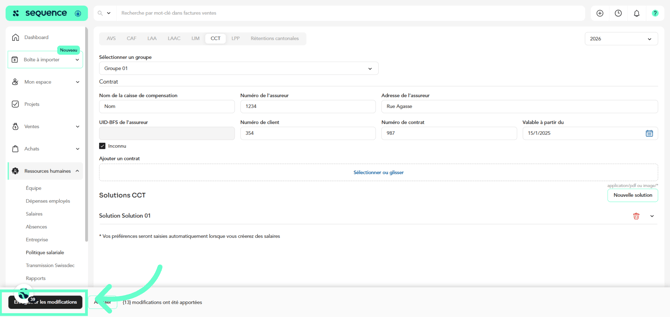
Once the CCT salary policy has been completed, along with all other policies, you will be able to specify which groups apply specifically to each of your employees, so that the corresponding contributions are correctly applied in their contracts.